Geological Data Collection
The Rusk County Groundwater Conservation District performs downhole well inspections at well sites throughout the county using Geologic Electrical Line (E-Log) Equipment.
The E-Log provides the lithology and aquifer conditions the well passes through by collecting Gamma, SP, SPR, and Conductivity information.
This assists the District in confirming the aquifer(s) or different water zones that the well passes through to address and prevent commingling of different water qualities. It also improves the Groundwater Availability Model (GAM) in monitoring current conditions of the aquifers.
Healthy Well Inspections
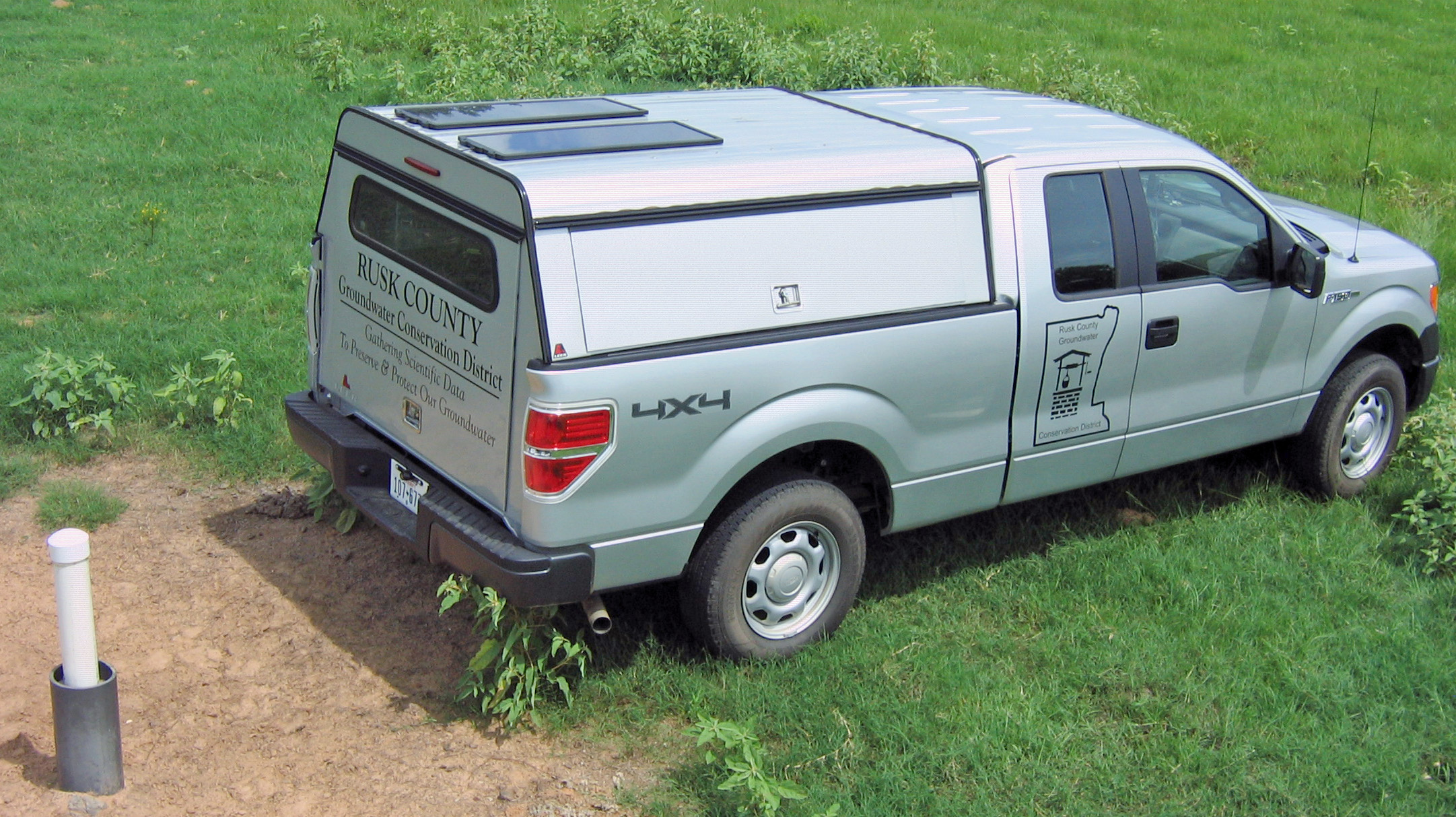
District field staff perform site inspections for existing wells and newly constructed wells.
While performing these inspections, District field staff verify surface conditions, such as setback distances to septic systems, flood plains, property lines, sources of contamination, and structural integrity of surface casing.
This assists the District by conserving, protecting, and preserving the aquifer from waste of water and groundwater contamination.
Related Links
View Alternative Well Setback PDF
District Rule 9.2.5
District Rule 9.2.5 requires any water well used to supply water for a rig that is actively engaged in drilling, exploration, or production operations for an oil or gas well permitted by the Texas Railroad Commission to be plugged within 180 days of well completion or to retain the well for beneficial use.
The well then must go through a transfer inspection, which is comprised of an E-Log, downhole camera, and surface inspection.
If a) there is no commingling of water zones, b) the structural integrity is good, and c) surface conditions are met, then the well can be utilized for beneficial use.
Otherwise, repairs must be made, or the well must be plugged, depending on the situation.
Related Links
District Rule 9.2.5 for Oil & Gas Water Well Production and/or Exploration
Groundwater Well Production Reporting
Through District rules, all non-exempt wells and exempt wells used for oil and gas exploration or production and mining are required to report the production of groundwater of those wells.
This allows the District to compare pumping, precipitation influence on recharge, and aquifer water level gathered for aquifer influence and interaction results for continual improvement of managing the groundwater resources.
Related Links
Groundwater Production Report Form for Non-Exempt Wells